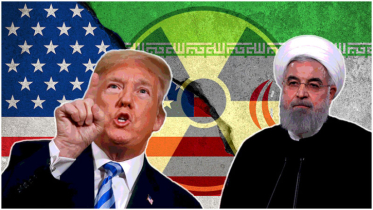
Oil retreats as Iran signals openness in talks with Trump
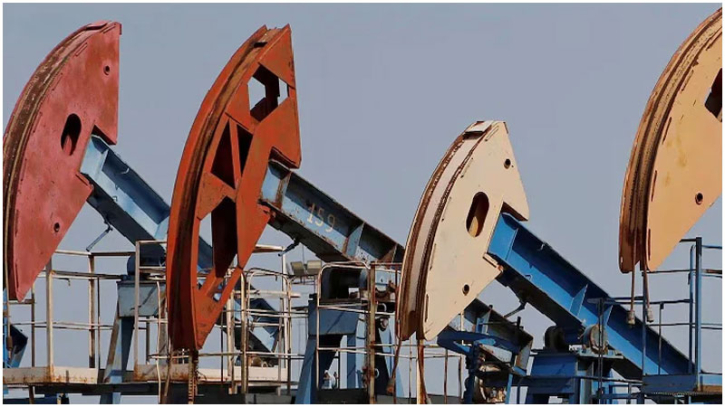
Oil prices fell back on Tuesday after Iran offered an encouraging tone during nuclear talks with US officials in Geneva, easing immediate concerns of a sharp escalation following days of strong rhetoric from President Donald Trump.
Crude had initially climbed after Trump renewed threats toward Tehran, a major oil producer, raising fears of supply disruptions. However, sentiment shifted after Iranian Foreign Minister Abbas Araghchi said that “a new window of opportunity has opened” in negotiations.
“We are hopeful that negotiation will lead to a sustainable and negotiated solution,” Araghchi said, while also warning that Iran remains prepared to defend itself against any threat or aggression.
Following the remarks, US benchmark West Texas Intermediate fell 0.9 percent to $62.33 per barrel, after earlier rising as much as 1.5 percent. International benchmark Brent crude slipped 1.8 percent to $67.42.
Analysts said markets were reacting to speculation that Iran might agree to dilute its most highly enriched uranium in exchange for a full lifting of financial sanctions. However, uncertainty remains over whether such a step would be sufficient to secure a broader agreement between the two sides.
Equity markets showed mixed movements. Wall Street fluctuated throughout the session before ending marginally higher. The Dow Jones Industrial Average and the S&P 500 both rose 0.1 percent, while the Nasdaq dipped 0.1 percent.
In Europe, stock markets closed firmly in positive territory. London’s FTSE 100 and Frankfurt’s DAX each gained 0.8 percent, while Paris’s CAC 40 advanced 0.5 percent. In Asia, Tokyo’s Nikkei 225 fell 0.4 percent, while markets in Hong Kong and Shanghai remained closed for the Lunar New Year holiday.
Investors also digested fresh economic data from the United Kingdom showing unemployment rising to 5.2 percent in the final quarter of last year, the highest level in five years. Analysts said the figures increase the likelihood that the Bank of England could cut interest rates next month.
Currency markets saw the US dollar weaken against the Japanese yen, while the euro remained flat against the greenback.
In corporate news, shares in German agrochemical giant Bayer surged nearly eight percent after it revealed that its subsidiary Monsanto had proposed a class settlement of up to $7.25 billion to resolve claims that its Roundup weedkiller causes blood cancer. The proposed settlement could potentially bring an end to years of costly legal battles.
Overall, financial markets reflected cautious optimism that diplomacy between Washington and Tehran could reduce geopolitical tensions, though investors remain alert to the risk of renewed volatility.
.png)