Asian stocks steady amid holiday lull as weak Japan data tempers optimism
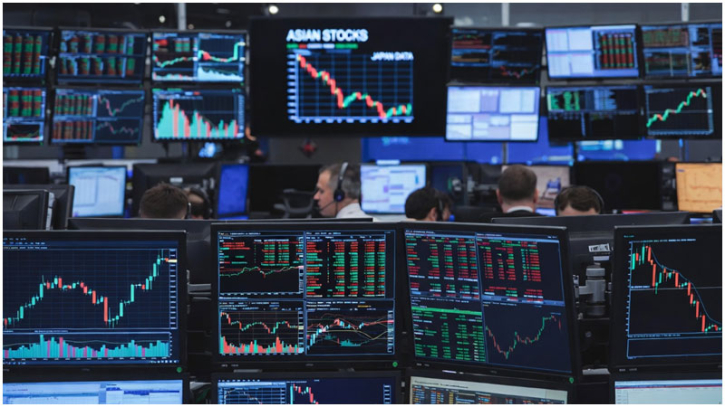
Asian shares paused on Monday after a run of strong gains, with trading volumes thinned by public holidays across major markets and weaker-than-expected economic data from Japan dampening enthusiasm.
Financial centres in China, South Korea, Taiwan and the United States were closed, leaving currencies, commodities and bond markets largely subdued. Investors are now looking ahead to key data releases later in the week, including global manufacturing surveys and US fourth-quarter GDP figures. Economists expect annualised US growth of 3.0 percent, down from 4.4 percent in the previous quarter but still indicating solid expansion.
Japan reported that its economy grew just 0.1 percent on an annualised basis in the December quarter, well below forecasts of 1.6 percent. Government spending weighed on activity, underscoring the challenges facing Prime Minister Sanae Takaichi and bolstering arguments for more aggressive fiscal stimulus.
Despite the weak data, Japan’s Nikkei index edged up 0.2 percent, building on last week’s 5 percent surge. MSCI’s broad index of Asia-Pacific shares outside Japan rose 0.1 percent. South Korea’s tech-heavy market had jumped 8.2 percent last week, while Taiwan gained nearly 6 percent.
Market participants remain cautious about the technology sector. Nick Ferres of Vantage Point warned that a pause in capital expenditure by major technology firms could trigger a sharp correction in memory stocks, particularly in South Korea and Taiwan, where valuations have risen significantly this year.
In Europe, EUROSTOXX 50 futures were flat and DAX futures gained 0.2 percent. US futures also pointed modestly higher, with S&P 500 futures up 0.2 percent and Nasdaq futures adding 0.1 percent. Attention will turn to earnings from major retailers, including Walmart, for fresh insight into consumer spending trends.
A rotation away from technology stocks has supported defensive sectors, amid concerns over the rising costs of artificial intelligence investment and the disruptive impact of AI competition. Capital expenditure plans by major tech firms have expanded to around $660 billion, prompting analysts at Goldman Sachs to note that S&P 500 share buybacks have declined 7 percent from a year earlier. They said tighter free cash flow could increase the premium on companies returning cash to shareholders.
Bond markets have attracted inflows as investors trim equity exposure and softer US economic data reinforce expectations of further easing by the Federal Reserve. Yields on two-year US Treasuries fell to 3.408 percent on Friday, their lowest close since mid-2022. Futures markets imply a 68 percent chance of a rate cut in June, with about 62 basis points of easing priced in for the year.
The drop in yields weighed on the US dollar, which fell 0.8 percent last week on the dollar index. The currency slipped sharply against the Japanese yen before stabilising at 152.94 yen. The euro was little changed at $1.1870.
The Swiss franc’s strength has also drawn attention, with the euro falling below 0.9100 francs for the first time since 2015. Markets are watching for potential intervention by the Swiss National Bank as inflation hovers near the lower bound of its 0 to 2 percent target range.
In commodity markets, gold eased 0.5 percent to $5,014 an ounce after recent volatility driven by unwinding leveraged positions. Oil prices were steady, with Brent crude at $67.74 a barrel and US crude at $62.87, as traders assessed reports that Organization of the Petroleum Exporting Countries may resume output increases from April.
.png)