Big Oil executives under pressure to spell out growth plans
Big Oil executives are under pressure to spell out their plans for future growth after years of cost-cutting and heightened shareholder returns as investors fretted about peak oil demand.
With the transition to clean energy now expected to be slower, extending the need for fossil fuels, ExxonMobil, Chevron, Shell, BP and TotalEnergies are being asked to prove the longevity of their reserves and the strength of their project pipelines.
After oil prices fell 20 per cent last year and with a further oversupply of crude expected in 2026, shareholders this earnings season asked if companies should be using the opportunity to build up their assets.
“We think investors are likely to focus more on growth than distributions going forwards,” Biraj Borkhataria at RBC Capital said in a note. The ability to build reserves of crude to replenish production “was a key theme this quarter”, he wrote.
The pressure was most acute at Shell, which disclosed that its reserves had fallen to 7.8 years of production, down from nine years and the lowest level since 2013.
The first question to chief executive Wael Sawan on the results call captured the mood: “How can you counter the market concerns that the business is simply shrinking?”
Companies across the sector are pulling three levers to ensure future growth: stepping up exploration, striking access deals with resource-rich countries, particularly in the Middle East, and pursuing mergers and acquisitions.
“They are going to have to use all three quite actively,” said Tom Ellacott at consultancy Wood Mackenzie. “And they need to work their base assets harder as well.”
At the front of the pack sits ExxonMobil, which has the industry’s most expansive growth narrative and one of its deepest portfolios.
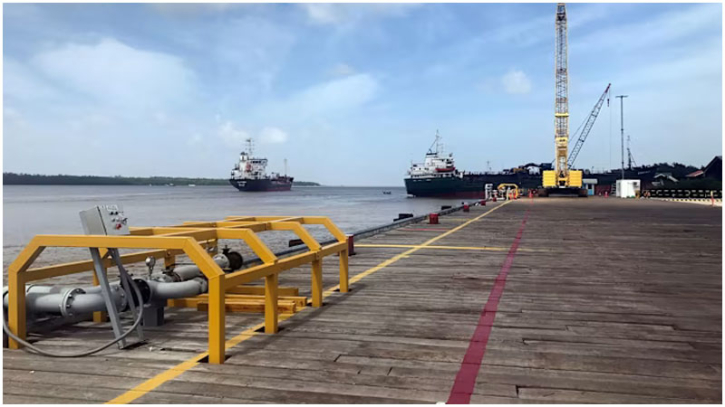
Chief executive Darren Woods said the company continued to set production records in the Permian Basin and saw no imminent peak. In Guyana, where Exxon is leading one of the largest offshore oil developments in history, he said the group was delivering “results never before seen in our industry”.
Chevron is also leaning into growth. Following its $53bn acquisition of Hess, which also gives it a stake in the Guyana project, the company reported record production last year and forecast output growth of 7-10 per cent in 2025.
The two US majors enjoy structural advantages. They trade at higher valuations than their European peers and have stronger balance sheets, giving them greater firepower for acquisitions.
“That sort of M&A capacity is a strategic advantage, especially if we see another downturn,” said Ellacott.
Borkhataria said the American groups may also enjoy a Trump boost, particularly in the wake of the US intervention in oil-rich Venezuela.
“The US administration’s more aggressive approach could lead to resource acquisition opportunities not available to European peers,” he said.
Shell’s thinner reserve base partly reflects past disposals, including the sale of its US shale business to ConocoPhillips in 2021 and its exit from Guyana in 2014. “If I were to look back, I wish we had not walked away from Guyana when we did. That is the honest truth,” Sawan told analysts.
Having prioritised cost-cutting and returning 40-50 per cent of cash flow to shareholders, Sawan is now focused on closing what he calls a “resource gap”.
“We are hungry for growth, don’t get me wrong, but we want to do it on the right terms,” he said, adding that Shell did not want to simply buy assets but to focus on oilfields where it can bring its expertise.
“I can tell you, I have a lot of opportunities coming to my desk on a regular basis,” he said, adding: “We have a few years to be able to fill that gap.”
Sawan — who appointed a new head of exploration, Eugene Okpere, on taking office — said Shell had yet to find “the bigger plays that allow us to potentially create big new hubs. That is the space we need to continue to work on to improve”.
At rival UK oil major BP there was a flurry of activity last year, including the discovery of Bumerangue, a field in Brazil that the company believes could contain as much as 8bn barrels of oil and other liquids. BP’s joint venture with Italian oil major Eni on Friday announced a find in Angola that it said could contain 500mn barrels of oil.
As it sought to play up its hand, BP’s executives used the word “growth” 30 times in a call with analysts, and explained that it had suspended its $6bn-a-year share buyback programme partly to give it more flexibility to invest in new projects.
“The team has created the best set of opportunities from an upstream exploration and access perspective that we have seen for a long time,” said interim chief executive Carol Howle. “We believe we’ve got a differentiated portfolio versus our competitors and our challenge is deciding how we access it.”
Total struck the most confident tone. According to data from AlphaSense, it referenced “growth” more often than any of its peers during its results presentation and emphasised that its reserves had consistently increased faster than production. “We maintained 12 years of reserves so we are comfortable to feed growth beyond 2030,” said chief executive Patrick Pouyanné. “Clearly we are a growing company.”
.png)