Trump's Venezuela oil push faces economic and political hurdles
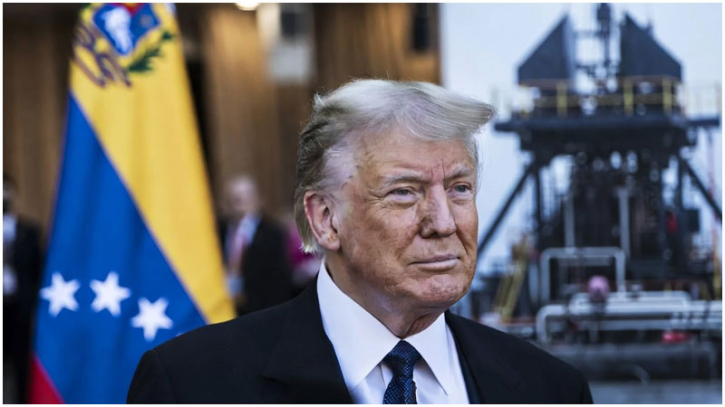
US President Donald Trump has signalled plans to visit Venezuela as part of a broader push to revive the country’s vast oil industry, but significant economic and political obstacles stand in the way of his ambitions.
Trump’s comments followed a two-day trip to Venezuela by US Energy Secretary Chris Wright, who assessed the country’s efforts to reopen its oil sector to private and foreign investors. The visit came shortly after Venezuela’s National Assembly approved legislation allowing outside investment in an industry that has been tightly controlled by the state for more than two decades.
Trump sees major potential in Venezuela’s oil reserves, which are officially the largest in the world. After meeting energy executives at the White House in mid-January, he said the US could oversee oil extraction on an unprecedented scale. His broader goal appears to be increasing global supply, lowering prices for American consumers and helping to stabilise Venezuela’s struggling economy under a more US-friendly government.
However, analysts question whether the numbers support such optimism.
Venezuela’s state-owned oil company, PDVSA, has suffered years of neglect and underinvestment under Nicolás Maduro and his predecessor, Hugo Chávez. Oil revenues were channelled into social programmes rather than maintenance and infrastructure upgrades. As a result, production has fallen sharply. A decade to 15 years ago, Venezuela was producing about 1.5 million barrels per day more than it does now.
Experts say reviving the industry would require enormous investment. Much of the equipment has deteriorated to the point where it would need to be replaced entirely. Trump has reportedly asked US oil companies to commit at least $100bn to rebuilding infrastructure before production can significantly increase.
While Venezuela claims to hold around 300 billion barrels of oil reserves, questions remain about how much of that oil is economically viable. During Chávez’s presidency, reserve estimates were sharply increased, largely due to high global oil prices that made previously marginal projects appear feasible. With oil prices currently around $65 a barrel, those calculations may no longer hold.
The quality of Venezuela’s oil also presents challenges. Its heavy, sour crude is more expensive to extract and refine and can damage pipelines because of its high sulphur content. This makes it less attractive compared with lighter, sweeter grades produced elsewhere.
The country’s broader economic crisis adds further complications. Nearly eight million Venezuelans have left in recent years, including many skilled engineers once employed by PDVSA. The loss of technical expertise has further weakened the oil sector’s operational capacity.
There are also political risks. In 2007, US companies such as ExxonMobil and ConocoPhillips had their Venezuelan assets seized after refusing to cede majority control to PDVSA. Although international courts later awarded them billions in damages, those sums remain unpaid. The current government structure remains largely intact, raising concerns among investors about the possibility of renewed expropriation.
Security is another issue. State-backed paramilitary groups known as colectivos operate in parts of the country, and US officials have said there are no plans to offer security guarantees to American oil firms operating there.
Industry leaders have expressed caution. ExxonMobil’s chief executive, Darren Woods, recently described Venezuela as “uninvestable” under present conditions. Analysts argue that without stronger incentives or guarantees from Washington, companies are unlikely to commit vast sums to such a risky environment.
Some critics suggest the Trump administration’s approach relies more on pressure than persuasion. Rather than offering financial incentives, Trump has threatened to block certain investments, prompting observers to describe the strategy as heavy-handed.
Even if production were to rebound, the impact on global oil prices would depend on how quickly and how much output increases. Analysts describe the situation as fluid and highly uncertain, shaped as much by geopolitics as by economics.
For now, while Venezuela’s oil reserves look impressive on paper, the path to turning that potential into profitable production appears long and fraught with risk.
.png)