Bangladesh's businesses hope for revival as new govt taking charge
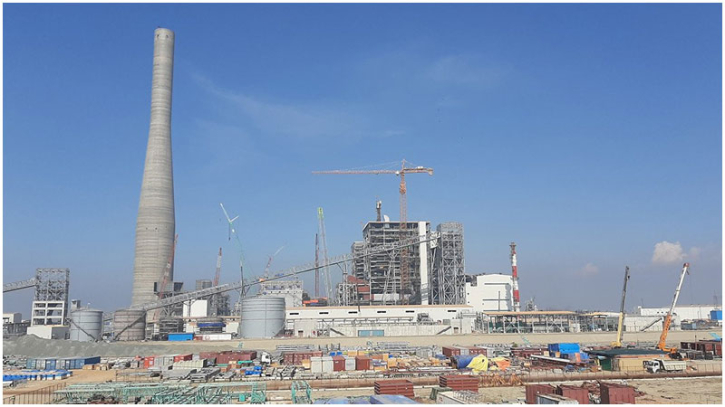
"Give us energy — everything else will follow."
It was less a plea and more a prescription from Moynul Islam, president of the Bangladesh Ceramic Manufacturers & Exporters Association (BCMEA), as the country prepares for a new government to take office on Tuesday.
"From textiles to garments to ceramics — all industries will grow if we get energy," he told The Business Standard on Sunday.
That single demand captures perhaps the most immediate and formidable challenge before the incoming administration: stabilising the energy sector to restore confidence in an economy already under strain.
Take the case of the power sector that is under stress.
Local independent power producers (IPPs) are owed between Tk13,000 crore and Tk14,000 crore by the government. When joint-venture plants are included, total outstanding dues could exceed Tk25,000 crore, according to the Bangladesh Independent Power Producers' Association.
A fortnight ago, the association warned that unless at least 60% of arrears are settled promptly, producers may have no option but to shut down their plants — a move that could push the already fragile power system into deeper distress ahead of Ramadan and the peak summer season.
Shafiqul Alam, lead analyst for Bangladesh at the Institute for Energy Economics and Financial Analysis (IEEFA), noted that oil-fired plants accounted for 10.73% of total power generation on average in the last fiscal year. Between March and May, their contribution rose to between 11.27% and 12.5%, significantly above the annual average.
"If supply from oil-fired plants stops due to the dispute over unpaid bills, there will be severe load-shedding in the summer," Alam warned.
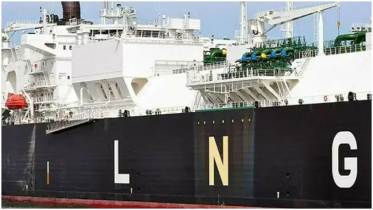
The risk is compounded by currency value and logistical constraints in handling imported liquefied natural gas (LNG), leaving policymakers with limited room to manoeuvre.
Gas supply: falling output, rising costs
If power dues present an immediate fiscal risk, the gas situation reflects a deeper structural problem.
Despite repeated tariff hikes, gas supply has continued to decline.
Petrobangla data shows that as of 14 February, total gas supply from state-run companies, international oil companies and imported LNG fell to 1,958 mmcfd, against a production capacity of 3,854 mmcfd. On 31 December, supply stood at over 2,558 mmcfd.
Imported LNG supply alone dropped sharply to 571 mmcfd on 14 February from 822 mmcfd at the end of December.
For industries, especially textiles, this is not a marginal inconvenience but an operational constraint. Many mills are running well below capacity due to unreliable gas supply.
"If we get the required gas supply, textile mills' production will increase by 25–28% and costs will decline by 7%," said Mohd. Khorshed Alam, chairman of Little Group.
He argued that a number of industrialists have slipped into loan default not because of mismanagement, but because production was disrupted by gas shortages.
"There must be a clear gas policy. Otherwise, there will be no investment — neither local nor foreign," said Alam, who also heads the Bangladesh China Chamber of Commerce & Industry.
The energy squeeze, in other words, is feeding directly into banking stress and investor hesitation.
Structural weaknesses resurface
Yet energy is only the most visible part of a broader economic fragility.
Moynul Islam pointed to non-performing loans — reportedly exceeding 30% of total loans in the banking sector — along with corruption and extortion as additional hurdles the new government must confront.
Reviving a bureaucracy that has often appeared paralysed will be another test, he said, urging continuity in corrective measures currently undertaken by the central bank.
Dr M Masrur Reaz, chairman and CEO of Policy Exchange Bangladesh, outlined four immediate priorities: consolidating macroeconomic stability, reinvigorating growth drivers, restructuring economic governance and implementing time-bound reforms.
"The macroeconomy has seen some stability recently, but that must be consolidated further, especially given persistently high inflation, weak investment and sluggish imports," Masrur said.
Private investment has fallen to 22% of GDP. Small and micro enterprises — still reeling from the Covid-19 pandemic — remain under severe stress. Reviving these growth engines will be critical to restoring momentum.
Masrur stressed the need for a time-bound reform programme encompassing economic governance, customs modernisation, tax rationalisation and trade facilitation — reforms essential to attract investment and boost exports.
Labour market warning signs
The energy and investment slowdown is increasingly visible in the labour market.
The World Bank recently warned that employment fell by nearly 20 lakh between 2023 and 2024, with a further decline of 8 lakh projected in 2025. Labour incomes have weakened amid slow job creation and slower real earnings growth for less-skilled workers.
Women and youth have been hit the hardest, as job creation stagnated in manufacturing and shifted toward less productive sectors. Inflation has outpaced wage growth for poorer households, with projected 2025 price increases more than double those seen during the Covid-19 pandemic.
As a result, poverty is estimated to have risen from 18.7% to 21.2%.
For years, Bangladesh was seen as a model of steady poverty reduction. That narrative now appears under pressure.
Recovery will take time
Even so, expectations of a swift turnaround may be unrealistic.
Dr KAS Murshid, former director general of BIDS, cautioned that economic and institutional recovery will not happen overnight.
"Though the new government will inherit a better foundation than what the interim government had, it will take around two years to see meaningful recovery," he said.
For now, however, the message from industry is unequivocal: stabilise energy supply, clear arrears, restore policy predictability.
Everything else — investment, job creation, growth — may follow.
But without reliable power and gas, recovery risks remaining a promise rather than a prospect.
.png)