G7 considers measures as oil prices surge
Group of Seven (G7) nations have said they are prepared to take “necessary measures” to support global energy supplies after the war involving the United States, Israel and Iran triggered a sharp spike in oil prices.
The commitment came after a virtual meeting between G7 finance ministers and the International Energy Agency (IEA), although no final decision was reached on releasing emergency oil reserves.
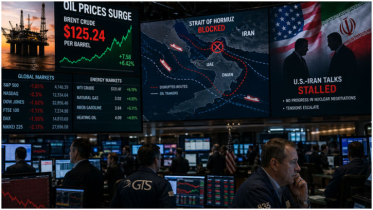
Oil prices climbed close to $120 per barrel on Monday amid fears that the conflict could severely disrupt supplies from the Middle East. Prices later fell sharply after US President Donald Trump suggested the war could end soon.
During the meeting, IEA Executive Director Fatih Birol warned that global oil markets have deteriorated in recent days as tensions escalate.
He noted that oil shipments through the Strait of Hormuz face serious risks and that a significant portion of production has already been curtailed. According to Birol, IEA member countries currently hold more than 1.2 billion barrels of public emergency oil reserves, along with another 600 million barrels held by industry under government obligations.
Despite the growing concerns, French Finance Minister Roland Lescure said the situation has not yet reached the point where releasing emergency reserves is necessary.
If such a step is taken, it would mark the first coordinated release of strategic reserves since 2022, when countries acted in response to the global energy shock following Russia’s invasion of Ukraine.
In a joint statement after the meeting, G7 nations said they remain ready to act, including releasing stockpiled oil if needed to stabilize global energy markets.
UK Chancellor Rachel Reeves said Britain had used the meeting to call for an immediate de-escalation of tensions in the Middle East and to ensure the safety of shipping routes in the region. She added that the UK would support a coordinated release of IEA oil reserves if circumstances required it.
The ongoing conflict has heightened fears of major disruptions to global energy flows, which could drive up fuel costs for households and businesses worldwide. Higher energy prices could also increase inflation and force central banks to delay or reconsider planned interest rate cuts.
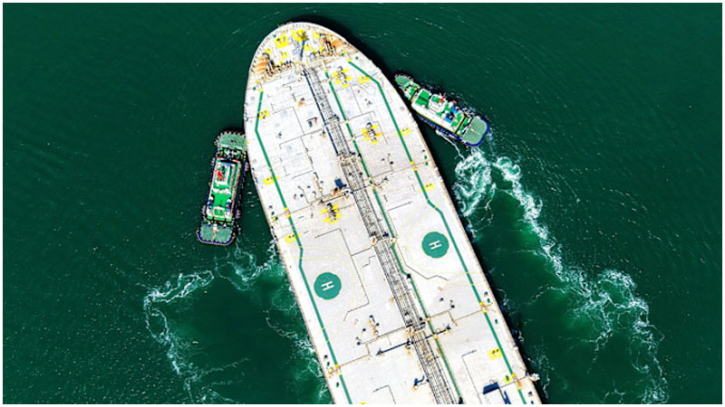
Around 20 percent of the world’s oil normally passes through the Strait of Hormuz, a narrow but critical shipping route in the Gulf. However, traffic through the strait has slowed dramatically since the conflict began more than a week ago.
Over the weekend, the United States and Israel launched new waves of airstrikes across Iran, targeting several sites including oil depots. Iran, in turn, has targeted energy infrastructure in neighbouring Gulf countries.
Saudi Arabia reported that it intercepted and destroyed two waves of drones heading toward a major oilfield overnight.
Markets had initially remained relatively calm despite the possibility that millions of barrels of crude oil and liquefied natural gas could be trapped in the Gulf. However, the escalation over the weekend and the visible damage to energy infrastructure across the region triggered renewed anxiety in global markets.
On Monday morning in Asia, Brent crude briefly surged by more than 25 percent to around $119.50 per barrel before retreating sharply after Trump told CBS News that the war was “very complete, pretty much”.
Trump has previously dismissed concerns about rising oil prices. In a post on his Truth Social platform, he said that short-term increases in oil prices would be a small price to pay for eliminating what he described as the threat from Iran’s nuclear program.
Energy market analysts say the biggest uncertainty now is how long the conflict will last.
Paul Gooden, head of natural resources at NinetyOne Asset Management, said prolonged fighting would make oil markets increasingly nervous. He added that prices could temporarily rise to between $120 and $150 per barrel, a level where consumers might start cutting back their energy use.
Gas markets have also reacted sharply. In the United Kingdom, month-ahead gas prices jumped nearly 25 percent to 171 pence per therm at the start of trading on Monday before easing back to around 149 pence.
Although gas prices have almost doubled since the war began, they remain well below the peak of 640 pence per therm reached in 2022 following Russia’s invasion of Ukraine.
Financial markets also experienced volatility. US stock markets opened lower but recovered later in the session, with the S&P 500 closing 0.8 percent higher and the Dow Jones Industrial Average ending up 0.5 percent.
London’s FTSE 100 index also recovered from earlier losses to close just 0.3 percent lower. Energy companies were among the biggest gainers, with shares of Shell rising 2.4 percent and BP increasing by 1.9 percent.
Elsewhere in Europe, Germany’s DAX index fell 0.8 percent while France’s CAC 40 dropped 1 percent. Earlier in Asia, Japan’s Nikkei 225 had declined 5.2 percent and South Korea’s Kospi closed 6 percent lower.
Rising oil prices have also pushed government borrowing costs higher as markets reconsider the outlook for interest rates. Before the conflict, investors expected central banks to cut rates this year. However, the surge in energy prices has raised concerns about renewed inflation.
In the UK, the interest rate on two-year government bonds rose to 4.09 percent from 3.88 percent, while yields on benchmark 10-year bonds increased to 4.72 percent from around 4.3 percent before the conflict began.
Adnan Mazarei of the Peterson Institute for International Economics said the sharp rise in oil prices reflects growing recognition that the conflict could be prolonged, particularly as some production has already been disrupted in Gulf countries.
He warned that earlier assurances about market stability and quick resolution are beginning to look increasingly unrealistic as the crisis deepens.
.png)