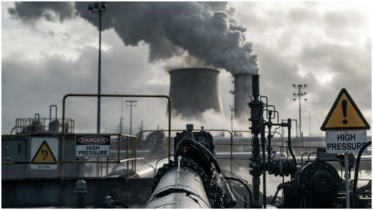
China sets lowest economic growth target in more than three decades
China has set its annual economic growth target at 4.5–5 percent, marking the lowest expansion goal since 1991 as the country faces mounting economic challenges both domestically and globally.
The target was announced during China’s largest annual political gathering, known as the “two sessions,” where leaders also released early details of the country’s 15th Five-Year Plan for economic development. The plan is expected to outline China’s long-term growth strategy through 2030.
The revised target reflects concerns over several ongoing issues, including weak domestic consumption, a shrinking population, a prolonged property sector crisis, global trade tensions and energy supply pressures linked to the Middle East conflict.
Analysts say the lower target gives Beijing greater flexibility in managing the economy without having to introduce massive stimulus measures simply to meet a fixed growth figure. Jason Bedford of the East Asian Institute said flexible targets have occasionally been used before, particularly during the pandemic, but they are not usually the norm.
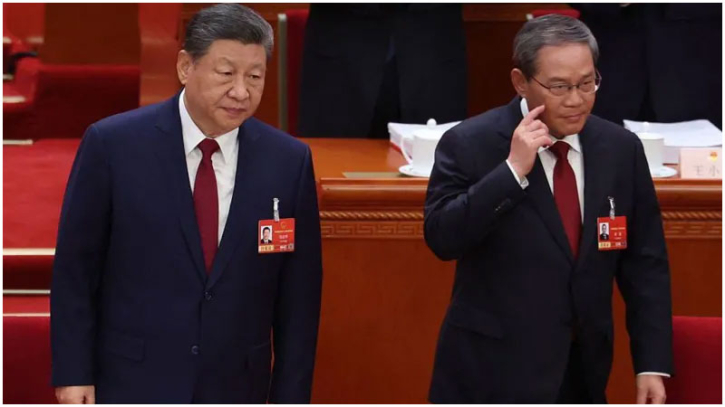
The two sessions, which began this week, bring together China’s top political leaders for discussions on major economic and policy priorities. The growth target and key policy goals were included in a 46-page government report presented by Premier Li Qiang.
Li told delegates that the new Five-Year Plan would focus on investment in innovation, high-tech industries, scientific research and measures to stimulate household consumption. The government also plans to launch more than 100 major projects in sectors such as science and technology, transportation and energy to strengthen industrial capacity.
China is also seeking to expand green energy development and reduce carbon emissions as part of its broader economic transformation.
The government report additionally highlighted plans to build a “childbirth-friendly society” as Beijing attempts to address falling birth rates and an ageing population, both of which are creating long-term challenges for economic growth.
Official figures earlier showed China achieved its overall 5 percent growth target for 2025. However, economic expansion slowed to 4.5 percent in the final quarter of the year due to weak domestic spending and ongoing problems in the property sector.
China’s real estate market, once accounting for nearly a third of the country’s economy, has been struggling for several years. The downturn has led to layoffs, lower wages and rising debt levels among local governments that relied heavily on property-related revenues.
Despite the slowdown, manufacturing and exports have helped support the economy. China recorded a record trade surplus of $1.19 trillion last year, reflecting strong global demand for its goods.
However, analysts warn that heavy reliance on exports also exposes China to external risks, particularly as US tariffs and global trade tensions continue to affect the country’s export-driven sectors.
China has responded by redirecting trade to other markets and expanding its manufacturing output, while also accelerating its transition toward renewable energy to reduce reliance on fossil fuels.
.png)