Iran conflict pushes Europe toward fresh energy crisis
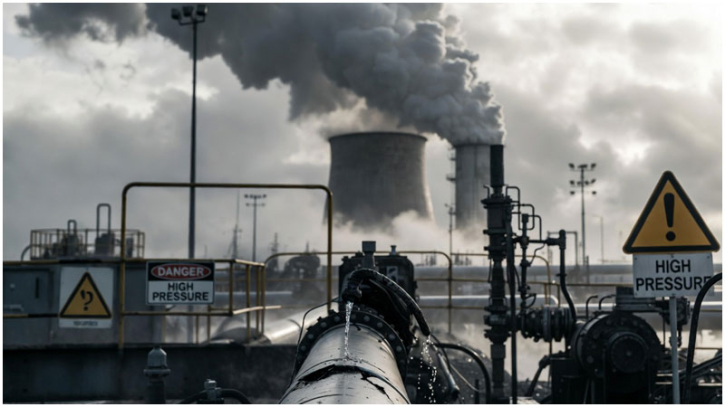
Europe spent years trying to shore up its energy defenses but war in the Middle East threatens to plunge it into another crippling gas crisis.
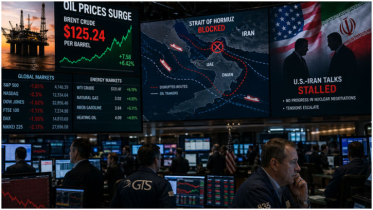
European natural-gas prices have surged roughly 70% since the U.S. and Israel attacked Iran. The widening conflict has halted traffic through the Strait of Hormuz, a chokepoint for energy markets that is a thoroughfare for one-fifth of the world’s liquefied natural gas.
A rout in European markets deepened on Tuesday, with stocks falling more than 3% across the continent and borrowing costs jumping in countries such as the U.K., Italy and Greece.
Higher energy prices threaten to reignite inflation and derail an economy that is only now finding its footing after the crisis that Russia’s invasion of Ukraine triggered in 2022.
“Europe relaxed a bit after the energy crisis and now we find ourselves potentially at the start of another energy crisis,” said Simone Tagliapietra, a senior fellow at Bruegel, a think tank in Brussels. “This is now a wake-up call to everybody.”
European officials sought to play down the risks of an imminent supply disruption, while economists said higher prices shouldn’t do too much economic harm if the conflict ends soon.
While gas prices have jumped above 50 euros a megawatt-hour, they remain far below the peak of more than €300 reached in 2022.
The longer it runs, the more energy flows from the Middle East could be disrupted and filter through to what European households and businesses pay for everything from electricity to food. Inflation in the eurozone could rise 0.5 percentage point if prices stay at their current levels, Capital Economics estimates.
Inflation fears were further fanned Tuesday by data showing eurozone consumer prices unexpectedly accelerated in February to an annual rate of 1.9%, ahead of the jump in energy prices. Investors are increasingly betting central banks in Europe will hold interest rates higher to contain price pressures.
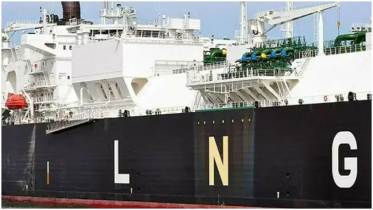
The EU gets less than 10% of its LNG from Qatar, the country at the heart of energy-market concerns. State-owned QatarEnergy on Monday said it would halt production after attacks on two facilities.
Less gas from Qatar means more competition for what’s left, teeing up a bidding war between European and Asian buyers. Prices in both regions surged this week, along with the cost of chartering tankers to move the gas.
Natural-gas prices in the U.S., meanwhile, were relatively calm. America’s status as an energy exporter, thanks to ample supplies of shale gas and oil, insulates the U.S. from energy-price shocks.
“Europe needs to outbid Asia in order to restock sufficiently for the next winter,” said Natasha Fielding, an analyst at Argus Media.
Europe is already on the back foot, with gas in storage running low at 30% of capacity. Germany’s gas caverns are 21% full, the lowest level for the time of year according to industry data that go back to 2017. Italy, which sucks in more than half of Qatar’s LNG exports to Europe, is particularly exposed.
With the worst of the winter heating season over, the region is unlikely to run out of gas. The bigger challenge is to stow away enough fuel for next winter.
Europe is still among the most vulnerable economies to swings in global markets. The EU relies on fossil-fuel imports for about 58% of its energy, a number that has changed little since the Russian invasion. Among major economies, only Japan and South Korea rely more on energy from abroad. South Korea’s stock index tumbled 7.2% on Tuesday, while Japan’s Nikkei 225 shed 3.1%.
The EU is set to convene a meeting of energy experts on Wednesday and asked member states to submit assessments of national reserves. A key topic is likely to be whether to restore storage-filling targets, which were introduced after the 2022 crisis and relaxed last year.
This week’s price surge is a reminder that there is only so much a continent lacking the fossil-fuel riches of America and Russia can do to shield itself from fluctuations in global markets. Soon after invading Ukraine, Moscow slashed supplies. Energy prices rocketed and inflation soared to around 11% in Europe, above the 9% peak in the U.S.
“It’s a bit like déjà vu,” said Jan Rosenow, a professor of energy and climate policy at the University of Oxford. “Unfortunately the overall situation is not much better today. You still see most energy used in Europe is imported.”
The EU pledged to diversify energy supplies by hunting for new sources of gas and building solar and wind farms. LNG terminals sprang up along coastlines to process imports, prime ministers flew to the Middle East to secure gas deals and governments subsidized energy-saving technology like heat pumps.
Most of all, Europe bought a lot more American gas. Russia’s share of EU gas imports declined from 45% in 2021 to 13% by last year—much of it LNG that the bloc plans to ban in 2027. The U.S. share has climbed to 27% and could reach 40% by 2030, according to the Institute for Energy Economics and Financial Analysis.
That influx calmed European markets after 2022, but the U.S. lacks one advantage Russia used to have as a supplier: It can’t jack up exports when prices are high. America is exporting as much as it can already. Only later this year, when new terminals are scheduled to open, will it be able to ship considerably more.
The loss of cheap Russian gas has taken a heavy toll on Europe’s economy. Industrial energy demand tanked and has never recovered as businesses closed down and sought to burn less gas. Average electricity prices for heavy industries in the EU are roughly twice those in the U.S. and 50% above China.
Another rise in gas prices could make it even harder for European companies to compete. Shares of turbine maker Siemens Energy, chemical giant BASF and other industrial companies have been among the hardest hit this week.
“For companies in Europe that are already struggling to compete with industry in China and the U.S., this is not good news,” said Rosenow, the Oxford professor.— Wall Street Journal.
.png)