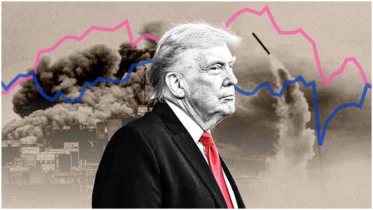
Iran conflict forces central banks to rethink policy
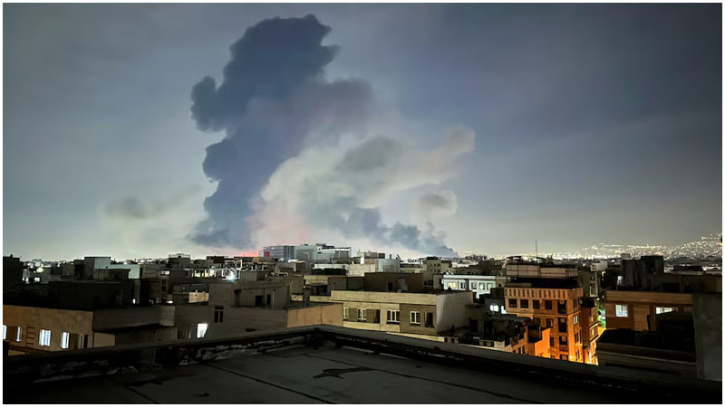
The escalating crisis in the Middle East is forcing global central banks to reconsider their strategies, as soaring oil prices create a difficult balance between supporting growth and controlling inflation.
For emerging Asian economies, cutting interest rates has become increasingly risky. Higher fuel costs add to inflationary pressures, while a rush toward the safe-haven dollar threatens capital outflows. The Reserve Bank of India, for example, plans to prioritize growth through low interest rates but may intervene to stabilize its currency amid dollar demand. Thailand and the Philippines could be forced to reverse their dovish monetary policies despite rising fuel costs, according to Toru Nishihama, chief emerging market economist at Dai-ichi Life Research Institute.
Stock markets in Asia fell sharply while the US dollar strengthened on Monday as oil prices surpassed $110 a barrel. The spike has heightened fears of prolonged Middle East conflict, threatening energy supplies and raising global inflation risks. Manufacturing-heavy economies such as South Korea and Japan face particularly acute challenges, as global trade, stable markets, and low raw material costs are under pressure.
South Korea’s central bank has kept rates steady but may adopt a more hawkish approach if inflation remains above target, said Citigroup economist Kim Jin-wook. Developed market central banks face similar dilemmas. The Bank of Japan, for instance, risks a slowdown if oil stays at $110 for a year, yet cannot ignore inflation that has exceeded its 2 percent target for almost four years.
Australia and New Zealand illustrate how different economic cycles complicate policy choices. Sustained oil price hikes could force Australia’s central bank to keep interest rates higher for longer, while New Zealand may need to tolerate short-term inflation to avoid tightening into a slowing global economy.
International Monetary Fund Managing Director Kristalina Georgieva warned that a persistent 10 percent rise in oil prices could push global inflation up by 40 basis points. “We are seeing resilience tested again by the new conflict in the Middle East,” she said. “My advice to policymakers in this new global environment is think of the unthinkable and prepare for it.”
.png)