Inclusive economy, institutional reform top priorities for new Finance Minister
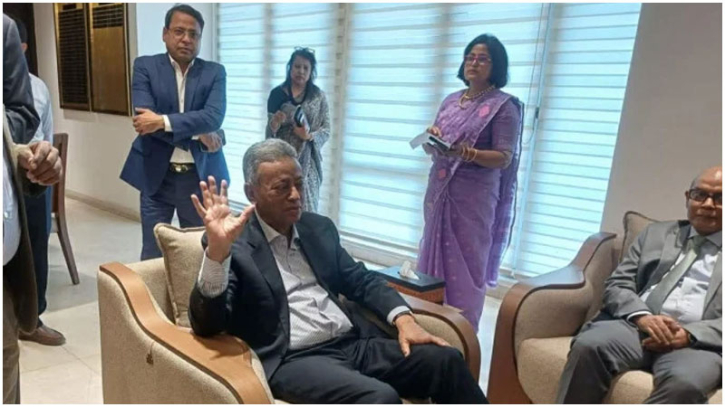
Newly appointed Finance and Planning Minister Amir Khasru Mahmud Chowdhury on Wednesday said Bangladesh must move away from a patronage-driven economic model and build an inclusive system where all citizens can participate and benefit.
Speaking to reporters at the Ministry of Finance on his first day at the Secretariat, he emphasised that restoring weakened state institutions would be his immediate priority.
“The immediate problem is that some state institutions are in extremely poor condition,” he said, adding that these bodies must be rebuilt with professionalism, transparency and efficiency. Without strong institutions, he warned, even the most ambitious programmes would fail to deliver results.
He described institutional reform as the “number one” task for the ministry, stressing that rebuilding governance structures is essential for sustainable economic management.
Outlining his broader vision, the minister said the economy must become democratic and inclusive. “A patronage-driven economy cannot be allowed to continue. Bangladesh’s economy must be for all people. There must be a level playing field so every citizen has the opportunity to participate and access its benefits,” he said.
As a third priority, he called for significant deregulation and liberalisation. According to him, excessive regulation—fueled by patronage politics—has made Bangladesh over-regulated, creating barriers to fair competition. Rationalising the regulatory framework would reduce corruption and rent-seeking, improve competitiveness and boost investor confidence, he added.
Summarising his agenda, Amir Khasru said institutional reform, deregulation and inclusive participation would form the core pillars of his economic strategy.
On Monday, the BNP Standing Committee member and Chattogram-11 MP took oath as Finance and Planning Minister. He previously served as Commerce Minister from 2001 to 2004 before resigning amid allegations that he allowed a syndicate to raise prices of essential commodities.
.png)