White House urges Iran to reach deal as Trump signals possible military action
The White House on Wednesday warned that Iran would be “wise” to strike a deal with the United States, as President Donald Trump once again hinted at potential military action.
The two countries recently resumed indirect talks mediated by Oman, following a period of heightened tensions after Trump repeatedly threatened force over Iran’s crackdown on protesters last month. A previous round of negotiations collapsed last June when Israel launched surprise strikes on Iranian targets, triggering a brief 12-day conflict that involved U.S. bombing of nuclear sites.
White House Press Secretary Karoline Leavitt told reporters, “Iran would be very wise to make a deal with President Trump and with his administration.” On his Truth Social platform, Trump also suggested the U.S. might strike Iran, with a military build-up underway in the Middle East. He warned Britain against ceding sovereignty over the Chagos Islands, citing the Diego Garcia base as potentially needed if Iran does not reach a deal.
Iran’s top diplomat, Abbas Araghchi, said on Wednesday that Tehran is drafting a framework for future talks. The second round of Oman-mediated negotiations took place in Geneva on Tuesday, with Araghchi noting agreement on “guiding principles,” though U.S. Vice President JD Vance said Iran had not yet acknowledged all U.S. red lines.
Iranian President Masoud Pezeshkian reiterated, “We do not want war,” but indicated Tehran cannot fully yield to U.S. demands, adding that the country would resist attempts to impose foreign will.
Araghchi also spoke with International Atomic Energy Agency chief Rafael Grossi, emphasizing Iran’s focus on drafting a coherent framework for further negotiations. Tehran has limited some IAEA access to sites previously struck by Israel and the U.S., citing bias.
Meanwhile, U.S. Energy Secretary Chris Wright said Washington will prevent Iran from acquiring nuclear weapons “one way or the other,” describing Iran’s nuclear intentions as unacceptable.
The talks aim to avoid military conflict, with Iran seeking sanctions relief while limiting discussions to nuclear issues. Washington has also increased its military presence in the region, deploying a second aircraft carrier alongside the USS Abraham Lincoln, stationed roughly 700 kilometers from the Iranian coast.
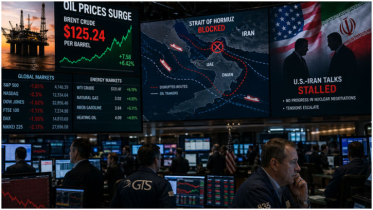
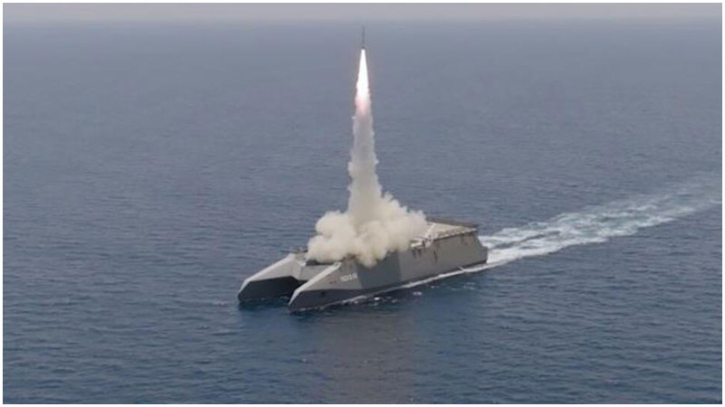
In response, Iran’s Islamic Revolutionary Guard Corps began war games in the Strait of Hormuz on Monday, with state media reporting partial closures of the strategic waterway during the exercises. Iranian officials have previously threatened to block the strait, a vital channel for global oil and gas supplies.
.png)