Winners and losers from Trump's new 15% tariff
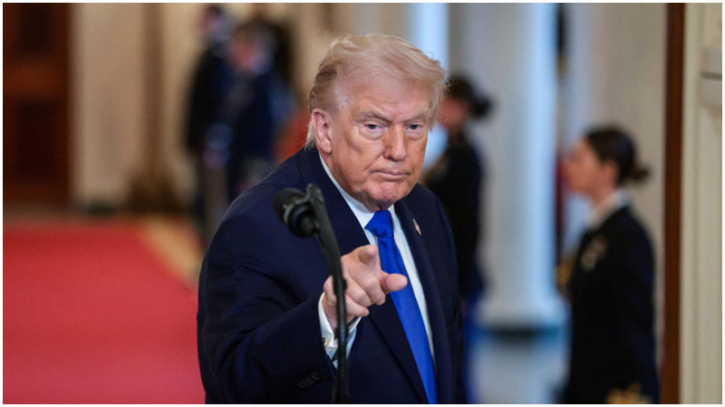
The annulment by the Supreme Court of the United States of President Donald Trump’s “reciprocal” tariffs — followed by his move to introduce a temporary 15% global tariff — has redrawn the map of trade winners and losers.
Data comparing the new 15% baseline with pre-ruling trade-weighted tariff levels show sharp shifts for several major economies.
Biggest beneficiaries
Countries that had previously faced much higher effective US tariffs stand to gain the most from the 15% cap:
- Brazil sees the largest drop, with tariffs falling by 13.56 percentage points.
- China benefits from a 7.14-point reduction.
- India records a 5.63-point fall.
- Vietnam and Thailand see declines of 2.81 and 2.03 points respectively.
- Canada and Mexico also experience notable reductions, down 3.27 and 2.9 points.
- Malaysia posts a 1.69-point drop, while Taiwan sees a 1.25-point decline.
- For these economies, the uniform 15% rate is significantly lower than what they had previously been facing.
Relative losers
By contrast, several advanced economies that had lower pre-ruling tariff exposure now face increases under the flat 15% system:
- The European Union sees an increase of 0.78 percentage points overall.
- The United Kingdom records the largest rise among developed peers, up 2.05 points.
- Japan (+0.45), South Korea (+0.56), Germany (+0.63), France (+0.96), and Italy (+1.7) all face modest increases.
- Singapore (+1.13), Switzerland (+0.37), Netherlands (+0.51), and Ireland (+0.08) also see smaller upticks.
Uncertainty over trade deals
The shift is particularly sensitive for economies such as the United Kingdom, the European Union and Japan, which had sought to limit exposure to the earlier reciprocal tariffs through bilateral understandings with Washington. With the Supreme Court striking down the legal basis for those tariffs, questions remain over whether existing arrangements will hold under the new 15% regime.
Overall, the flat global tariff reduces pressure on several emerging markets that had been heavily targeted, while raising the effective burden on a number of advanced economies that previously enjoyed lower trade-weighted rates.
.png)