Iran signs €500m deal with Russia for shoulder-fired air defence systems
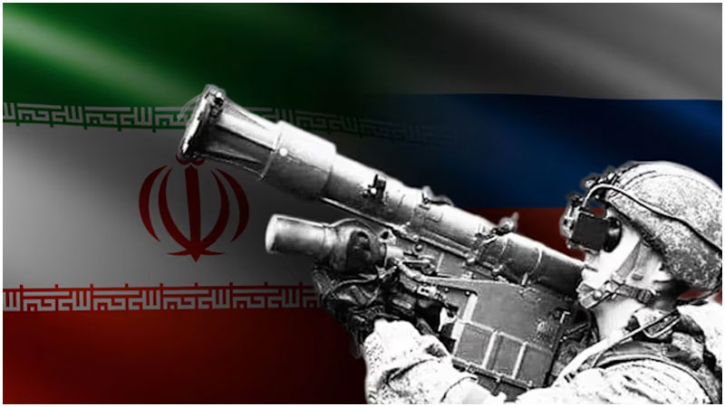
Iran has agreed to a confidential €500 million arms deal with Russia to acquire thousands of advanced shoulder-fired air defence missiles, marking a major step in rebuilding its defences after last year’s conflict with Israel.
According to leaked Russian documents and sources familiar with the agreement, the deal was signed in Moscow in December. Under the contract, Russia will supply 500 Verba man-portable launch units and 2,500 9M336 missiles over a three-year period from 2027 to 2029. The total value of the agreement is reported to be €495 million.
The Verba system is among Russia’s most modern portable air defence platforms. The infrared-guided missiles are designed to target low-flying aircraft, cruise missiles and drones. Operated by small mobile teams, the system allows forces to deploy dispersed air defences without relying heavily on fixed radar infrastructure, which can be vulnerable to air strikes.
Iran is believed to have formally requested the systems last July, shortly after a 12-day conflict with Israel in which the United States briefly joined strikes targeting Iran’s nuclear facilities. During that campaign, Iran’s integrated air defence network was significantly degraded, enabling Israeli forces to gain air superiority over large parts of the country.
The emergence of details about the Iran-Russia deal comes as US President Donald Trump has increased military deployments in the Middle East and warned Tehran of possible action unless it accepts restrictions on its nuclear programme.
The agreement was negotiated between Rosoboronexport, Russia’s state arms export agency, and Iran’s Ministry of Defence and Armed Forces Logistics (MODAFL). The contract was reportedly arranged by Ruhollah Katebi, a Moscow-based MODAFL official who previously facilitated Iran’s sale of Fath-360 short-range ballistic missiles to Russia during its war in Ukraine. Katebi was sanctioned by the United States in 2024 for acting on behalf of Iran’s defence ministry.
Iran’s ambassador to Moscow, Kazem Jalali, indicated this week that recent flights from Russia to Iran were linked to defence agreements, though he did not provide specific details. Flight tracking data show Russian Ilyushin Il-76TD cargo aircraft travelling between Mineralnye Vody in southern Russia and Iranian destinations in recent weeks. Reports also suggest Iran received up to six Russian Mi-28 attack helicopters earlier this year.
Under the leaked pricing structure, each 9M336 missile is valued at €170,000 and each launch unit at €40,000. The package also includes 500 Mowgli-2 night vision devices for tracking targets in low visibility conditions. Russia continues to price many international arms contracts in euros and dollars despite Western sanctions.
Analysts say the Verba systems offer Russia a relatively low-cost way to strengthen Iran’s air defences without significantly reducing its own capabilities. However, experts caution that the new systems are unlikely to dramatically alter the military balance in the event of another large-scale conflict involving Israel or the United States. They could, nonetheless, complicate operations involving helicopters or low-flying aircraft.
The agreement highlights ongoing military cooperation between Moscow and Tehran amid heightened Western scrutiny. Iran has supplied Russia with drones and missiles during President Vladimir Putin’s invasion of Ukraine, and the two countries signed a broader treaty to deepen bilateral ties in January 2025.
Western governments, including the United Kingdom, France and Germany, reimposed UN “snapback” sanctions on Iran last year, including restrictions on arms exports, amid escalating tensions over Tehran’s nuclear programme. Analysts say Russia’s decision to proceed with the Verba deal signals that Moscow is unlikely to support efforts to isolate Iran militarily.
Experts also note that unlike larger systems such as the S-300 or S-400, the portable Verba units require less training and integration, allowing Iran to deploy them more quickly. While the systems may not significantly shift the overall balance of power, they could enhance Iran’s ability to deter or complicate future air operations against its territory.
.png)