India strengthens Gulf energy partnerships while managing risks from Russian oil
India is pursuing a carefully balanced energy strategy as rising demand and geopolitical pressures reshape global markets, deepening long-term partnerships in the Gulf while continuing to source discounted crude from Russia and expanding its nuclear energy ambitions.
The approach reflects New Delhi’s effort to shield economic growth from energy volatility as global supply chains become increasingly politicised.
This week, United Arab Emirates President Sheikh Mohamed bin Zayed Al Nahyan concluded a visit with Indian Prime Minister Narendra Modi, during which the two sides signed a long-term liquefied natural gas supply agreement and pledged to more than double bilateral trade to over $200 billion by 2032.
Under the deal, Abu Dhabi National Oil Company will supply Hindustan Petroleum Corporation with 500,000 tonnes of LNG annually for 10 years starting in 2028, in an agreement valued at about $3 billion.
The deal builds on earlier cooperation, including a separate long-term LNG contract between Adnoc and Indian Oil Corp. for 1.2 million tonnes per year over 15 years, valued at between $7 billion and $9 billion.
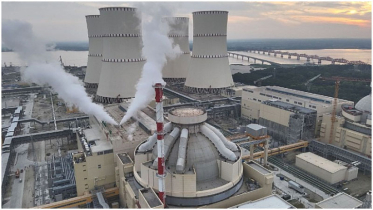
India and the UAE also agreed to expand cooperation in nuclear energy, covering both small modular reactors and larger conventional projects. The collaboration is backed by India’s recently passed SHANTI Act, which allows greater private and foreign participation in the nuclear sector.
For India, the move supports efforts to secure low-carbon baseload power as electricity demand rises, while for the UAE it leverages experience from the Barakah nuclear plant and helps sustain its role as a major energy supplier over the long term.
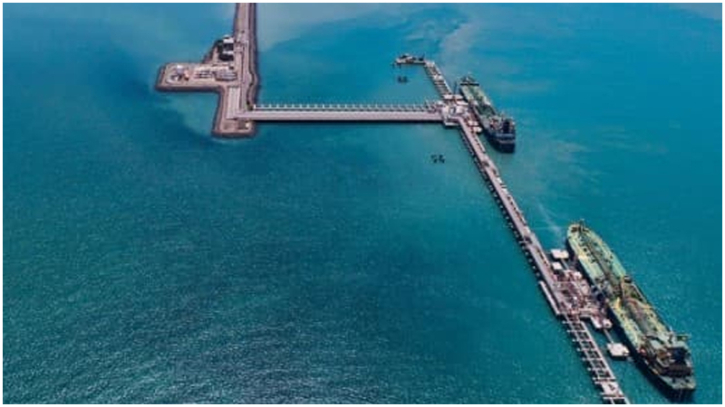
At the same time, India continues to purchase significant volumes of Russian oil, a policy that has drawn increasing scrutiny from the United States.
US President Donald Trump recently warned of potential tariffs on India over its Russian crude imports, while Republican Senator Lindsey Graham has proposed punitive tariffs of up to 500 percent on countries that continue to buy Russian oil, arguing such purchases support Moscow’s war effort.
Sanctions imposed by the Trump administration in late 2025 on Russian energy companies Rosneft and Lukoil led India’s largest private refiner, Reliance Industries, to sharply reduce its purchases.
While overall Russian imports initially declined, state-owned refiners such as Indian Oil, Bharat Petroleum and Hindustan Petroleum later offset the drop, often buying through non-sanctioned intermediaries under long-term contracts.
India is expected to drive the bulk of global oil demand growth in the coming years, fueled by rapid economic expansion, industrialisation, rising incomes and increasing vehicle ownership.
The International Energy Agency projects India’s energy demand will grow at around three percent annually through 2035, the fastest rate worldwide, with the country potentially accounting for nearly half of all new oil demand over that period.
At the same time, renewables are beginning to play a larger role in India’s energy mix. Last year, India and China recorded their first drop in coal use in more than five decades, reflecting accelerating clean energy adoption.
According to the Centre for Research on Energy and Clean Air, India’s coal-fired power generation fell three percent year on year, while China’s declined 1.6 percent, marking the first combined decrease since 1973.
The analysis showed that faster clean energy growth accounted for 44 percent of the reduction in coal and gas consumption, with milder weather and slower underlying demand growth also contributing.
Despite this shift, coal is expected to remain a key part of India’s energy system for the foreseeable future, as rising power demand and the need for reliable baseload capacity drive plans for additional thermal generation and an increase in overall coal consumption to about 1.5 billion tonnes by 2030.
.png)