India, Brazil sign mining pact as Modi eyes $20bn trade target
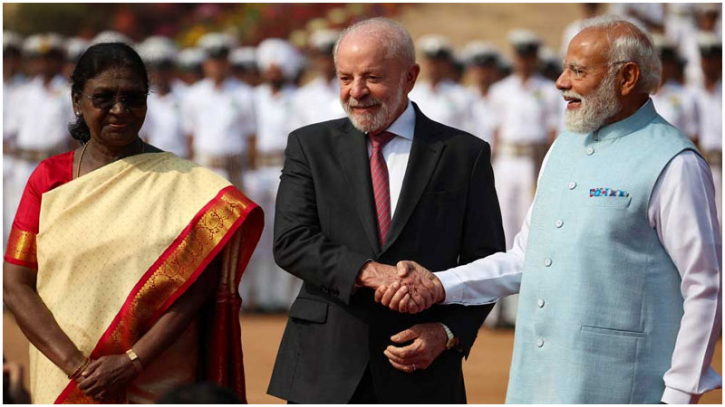
India and Brazil strengthened economic ties on Saturday by signing an agreement to expand cooperation in mining and minerals, as New Delhi seeks to secure raw materials for its growing steel industry and push bilateral trade beyond $20 billion within five years.
The pact was signed in the presence of Indian Prime Minister Narendra Modi and Brazilian President Luiz Inacio Lula da Silva, who is on a three-day visit to New Delhi.
Brazil, one of the world’s leading producers of iron ore, holds vast reserves of minerals vital to steel production. According to an Indian government statement, closer collaboration is expected to enhance India’s access to critical raw materials and technology needed to support long-term growth in its steel sector.
The agreement focuses on promoting investment in mineral exploration, mining operations and infrastructure development linked to steel production.
India currently has steelmaking capacity of 218 million metric tonnes, with companies expanding output to meet rising domestic demand fueled by infrastructure projects and industrialisation.
Speaking at a meeting with a Brazilian delegation led by Lula, Modi said discussions centered on strengthening trade and economic cooperation. “We are committed to taking bilateral trade much beyond $20 billion in the next five years,” he said. Current trade between the two countries stands at approximately $15 billion.
Modi also highlighted plans to expand collaboration in technology, innovation, digital public infrastructure, artificial intelligence and semiconductors.
India and Brazil have maintained a strategic partnership since 2006, working together in areas including trade, defence, energy, agriculture, health, critical minerals and digital infrastructure. Brazil is India’s largest trading partner in the Latin America and Caribbean region.
Both countries also coordinate on global issues such as UN reform, climate change and counter-terrorism. During his visit, Lula advocated for conducting bilateral trade in local currencies instead of the US dollar, though he dismissed suggestions that the BRICS bloc would introduce a common currency.
.png)