Trump–EU tariff showdown over Greenland threatens costly economic fallout
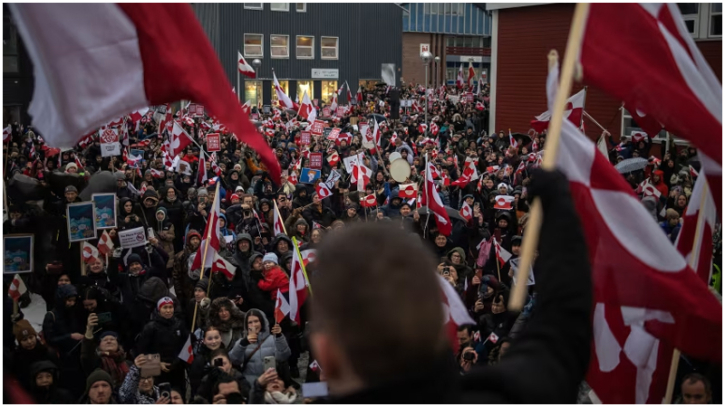
President Donald Trump’s decision to threaten new tariffs over Greenland and Europe’s swift consideration of countermeasures has set the stage for a potentially damaging trade clash that could raise prices and weaken both economies.
Trump announced Saturday that the United States will impose a 10% tariff beginning February 1 on goods from Denmark, Finland, France, Germany, the Netherlands, Norway, Sweden and the United Kingdom. The rate would rise to 25% on June 1 if Europe does not agree to terms over Washington’s proposed takeover of Greenland.
The move sparked an emergency meeting among European leaders. French President Emmanuel Macron reportedly urged the European Union to activate its anti-coercion instrument — informally known as a “trade bazooka.” Under this measure, the EU could block American companies from its market or impose export restrictions.
The tool was designed for use against major rivals like China, not an ally like the United States, experts noted. The EU is also weighing €93 billion in retaliatory tariffs already drafted last year but paused during a temporary US-EU truce.
Analysts warn that the situation could escalate quickly, raising business uncertainty and undermining investment. ING’s Carsten Brzeski expects European economic growth to shrink by about a quarter percentage point if tariffs go ahead.
Experts say neither side can afford a prolonged confrontation. The EU could take months to deploy its full retaliatory powers, while Trump’s move risks unraveling trade deals signed with Europe last year but not yet ratified. Some EU leaders have already stated that approval is now unlikely.
Economists also stress that Trump’s actions could further erode trust among US allies — a shift that would outlast any single presidency and weaken America’s long-term global position.
Despite the sweeping tariff orders, trade experts point out that Trump’s targeting of individual nations rather than the full European Union leaves a loophole: goods could be rerouted within the EU’s single market to bypass tariffs.
Beyond immediate economic effects, analysts warn that tariff uncertainty could push companies to delay investments or expand elsewhere. Trading partners are already building new alliances, with Canada deepening ties to China and the EU finalizing a long-delayed pact with South America’s Mercosur bloc.
Experts fear the result could be less US influence, weaker export competitiveness, and years of slower growth driven by factories never built and investments never made.
.png)