Trump unveils trade deal with India to cut tariffs
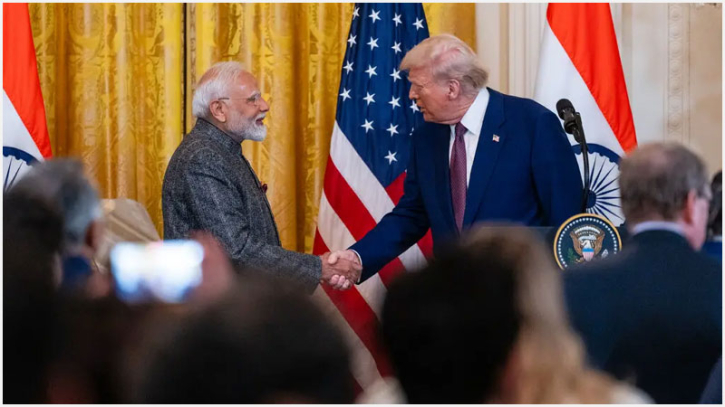
US President Donald Trump announced on Monday that the United States has reached a trade agreement with India aimed at rolling back some of the steep tariffs imposed on Indian imports, easing months of strained trade relations between the two countries.
According to Trump, the deal would see the United States reduce tariffs on Indian exports to 18 percent, down from the 50 percent rate imposed last year after difficult bilateral negotiations. In return, India would lower its tariffs and non-tariff barriers on selected American goods and halt purchases of Russian oil.
Details of the agreement remain limited. Trump said the arrangement would help defuse tensions and restore India’s appeal as a manufacturing hub, particularly for companies seeking alternatives to China. Analysts said the move could also strengthen India’s strategic alignment with the United States.
Indian Prime Minister Narendra Modi welcomed the announcement, saying he was “delighted” by the tariff reduction, though he did not confirm whether India would stop buying Russian oil as Trump claimed. Modi said closer cooperation between the two countries would benefit their people and unlock opportunities for mutual growth, praising Trump’s leadership on global stability.
Trump said India had agreed to significantly increase purchases of American goods, including energy, technology, agricultural products and coal, claiming the total value could reach $500 billion. He also said India would buy oil from the United States and potentially from Venezuela instead of Russia. Trump added that he and Modi had discussed ending the war in Ukraine.
Trade experts said the deal could restore India’s position as a key economic and geopolitical partner of the United States. Eswar Prasad, a professor at Cornell University, said it was notable that India appeared willing to ease restrictions on US agricultural exports, a politically sensitive issue in the country. However, he cautioned that immigration policy and remaining tariffs would likely remain points of friction.
The White House said further details would be released soon, noting that recent trade announcements have often begun as framework agreements that leave key elements unresolved. Some previous deals announced by the Trump administration, including those with South Korea and the European Union, have faced difficulties in implementation.
The announcement comes shortly after India concluded a major trade deal with the European Union and follows earlier agreements with Britain, Oman and New Zealand. Despite these moves, the absence of a deal with Washington had been a major concern for New Delhi, as the United States remains India’s largest trading partner.
Trump has long criticized India’s trade barriers, including high tariffs on automobiles and motorcycles. During his first term, efforts to strike a trade deal with India failed. Early optimism during his second term faded after the administration imposed fresh tariffs on Indian goods, citing India’s continued purchases of Russian oil.
While the reduction to an 18 percent tariff marks a significant cut, critics argue it still represents a sharp increase compared with previous years. Dan Anthony of the small-business coalition We Pay the Tariffs said the deal effectively locks in a permanent tax hike, noting that average tariffs on Indian goods were about 2.5 percent before Trump’s policies.
Industry groups remain divided. Export-oriented sectors such as pharmaceuticals, auto parts and chemicals support closer trade ties, while agricultural groups in India continue to oppose lower barriers, arguing they are needed to protect small farmers.
.png)