How Bangladesh economy stands to gain as dollar hits four-year low
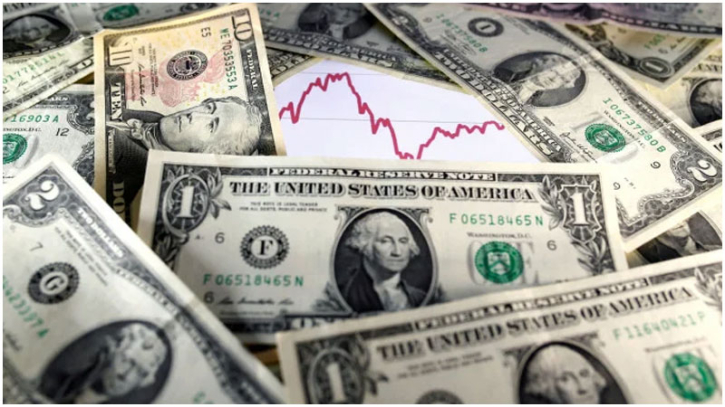
The weakening dollar, which hit a four-year low last week against major global currencies amid rising tensions between the US and Europe over Greenland, is expected to help Bangladesh contain inflation and ease its debt servicing burden, giving the central bank more flexibility in monetary policy.
However, it could dampen export earnings and remittance values unless gains in competitiveness and productivity offset the impact, according to market insiders.
The dollar's downturn is expected to appreciate the taka, as the euro and pound were among currencies that surged against the greenback this month. Eleven of the 19 emerging market currencies tracked by Oxford Economics also gained more than 1%.
Bangladesh Bank has been buying dollars at over Tk122 from the market for the past six months to contain volatility and support remitters and exporters, indicating that appreciation pressure is already present.
Against this backdrop, the central bank is expected to maintain a tight monetary stance for the second half of FY26, with the policy rate likely to remain unchanged at 10% when the monetary policy statement is announced next week.
A further fall in the global dollar price would help Bangladesh Bank reap the benefits of lower import costs, which would ease inflationary pressure and narrow the trade deficit, market insiders said.
Inflation has already begun to ease, falling to single digits from double digits, while the external balance remained comfortable. The financial account recorded a surplus of more than $1.2 billion during July-November of FY26, according to central bank data.
'Mixed but broadly supportive effects'
The US Federal Reserve is expected to lower interest rates amid mounting pressure from Donald Trump, a move that could weaken the dollar further as investors chase higher returns outside US Treasuries.
Explaining the impact on Bangladesh, a former Fed official, speaking on condition of anonymity, told The Business Standard that a weaker dollar would have mixed but broadly supportive effects on the economy.
"On the positive side, Bangladesh's large stock of dollar-denominated external debt, both public and private, would become cheaper to service in local-currency terms, easing fiscal pressure and balance-sheet stress," the official said.
Central bank data show total external debt stood at $113.20 billion at the end of FY25. The ratio of foreign exchange reserves to total debt rose to 23.60% from 20.80% a year earlier.
"Import costs for fuel, fertiliser, food grains, and capital machinery would also decline, helping contain inflation and narrow the trade deficit. For a country like Bangladesh, where imported inputs play a major role in domestic price formation, a softer dollar can translate relatively quickly into lower cost-push inflation, giving the central bank more flexibility in monetary policy," said the Fed official.
On the downside, export and remittance channels are more complex. Garment exports are largely dollar-invoiced, meaning a weaker dollar could reduce taka earnings unless higher volumes or price adjustments compensate, he said.
"Competitiveness will depend on peer currencies," added the official. "If the euro, pound or major Asian currencies strengthen, Bangladesh could gain market share. If competitor currencies weaken more sharply, export margins may come under pressure."
Remittances, mostly earned in dollars, could also convert into fewer taka, potentially weighing on household consumption, he explained.
"Overall, a weaker dollar would likely ease short-term macroeconomic pressures for Bangladesh, but longer-term growth will still depend on productivity gains, export diversification and careful exchange rate management," said the official.
'Overall gains outweigh losses'
Echoing this view, Md Ezazul Islam, director general of the Bangladesh Institute of Bank Management, said Bangladesh would gain more than it would lose from a weaker dollar.
He said the government would need to increase imports from the US as part of efforts to reduce tariffs, and a softer dollar would lower costs, offering significant relief.
In November last year, a consortium of Bangladesh's top three soy crushing companies – Meghna Group, City Group and Delta Agro – committed to buying $1 billion worth of US soybeans over the following 12 months.
Ezazul said the taka could strengthen further, allowing the central bank to buy more dollars and rebuild reserves.
Reserves rebuild amid stable dollar rate
Bangladesh Bank Governor Ahsan H Mansur recently told The Business Standard that reserves could reach $35 billion to $36 billion by June next year, based on official projections.
The central bank has already rebuilt more than $8 billion in reserves, mainly through market purchases at over Tk122, taking total reserves to $28 billion under IMF calculations.
Ezazul, also a former executive director of Bangladesh Bank, said the dollar rate had remained stable at Tk122.30 despite large-scale purchases, largely due to global dollar weakness.
"This signals that the central bank could gain naturally from further dollar softening in the coming months," he said. He added that exporters could also benefit, as Europe remains Bangladesh's largest export market and the euro has already strengthened against the dollar.
Lower import costs would help offset exporters' currency losses from a stronger taka, he said, although Bangladesh Bank may face income losses as much of its reserves are invested in US Treasuries.
On monetary policy, Ezazul said the central bank's tight stance was appropriate, as inflation would ease naturally if global prices fell amid a weaker dollar. "This is not the right time to cut the policy rate due to political uncertainty," he added.
Source: TBS
.png)