NASA releases striking new image of dying star's Helix Nebula
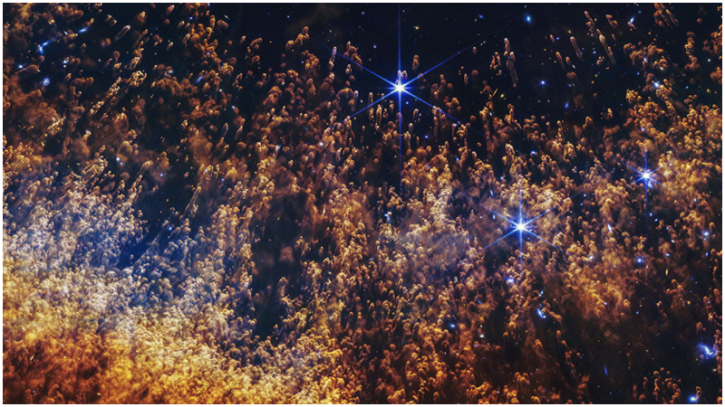
NASA has unveiled a new high-resolution image of the Helix Nebula captured by the James Webb Space Telescope, offering an unprecedented look at the complex structure of gas created by a dying star about 650 light-years from Earth.
The image, taken with Webb’s Near-Infrared Camera, focuses on the inner region of the nebula’s expanding shell of gas. It reveals intricate comet-shaped pillars and highlights the interaction between fast-moving, hot gas streaming from the central white dwarf star and the slower, cooler gas and dust expelled earlier in the star’s life.
NASA explained that the colours in the image correspond to different temperatures and chemical compositions within the nebula. Blue areas represent the hottest gas energized by ultraviolet radiation from the central star, yellow shows molecular hydrogen, and red traces the coolest gas and dust farther from the core. This process illustrates how dying stars return material to space, where it can later contribute to the formation of new planets in other star systems.
The Helix Nebula has been studied extensively by previous observatories, including the Hubble and Spitzer space telescopes. However, NASA said Webb’s near-infrared view brings much sharper detail to the nebula’s well-known “knots” of material and offers clearer insight into how hot gas gradually cools as the nebula expands.
The agency also noted that some of the dark regions visible in the image may be areas where more complex molecules are beginning to form, shedding new light on the chemical evolution of material released by dying stars.
.png)