Bangladesh forex reserves seen crossing $35bn by FY26

Bangladesh Bank Governor Dr Ahsan H. Mansur on Monday voiced strong confidence in the country’s macroeconomic outlook, saying foreign exchange reserves are on track to reach and exceed $35 billion by the end of the current fiscal year 2025-26.
Speaking at a seminar titled “Systematic Efforts to Understand Economic Pulse: Importance of Purchasing Managers' Index (PMI)” at the Metropolitan Chamber of Commerce and Industry (MCCI) in Dhaka, the governor said achieving the $35 billion mark would place the economy in a very comfortable position.
The seminar was jointly organised by MCCI and Policy Exchange Bangladesh.
Mansur said the reserve target is expected to be achieved without relying on funds from the International Monetary Fund, adding that any additional external financing would be a bonus rather than a necessity.
He highlighted notable improvements in the balance of payments and the external sector, while acknowledging that exports remain under pressure and continue to be a weak area. However, he pointed to favourable global trends, including lower energy and commodity prices, which have improved Bangladesh’s terms of trade.
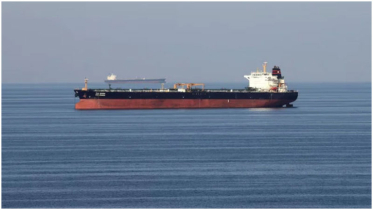
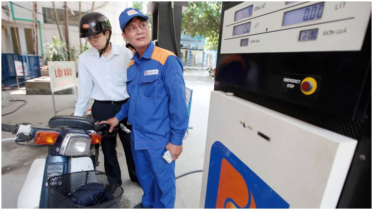
Citing petroleum prices as an example, the governor said average prices have declined by about 30 percent, describing the drop as a direct economic gain. As a result, while import payments have risen by around 5 to 6 percent this year, the actual volume of imports has increased much more sharply.
He noted that data from Chittagong port supports this trend, showing strong growth in both cargo tonnage and container traffic.
Addressing the banking sector, Mansur said liquidity conditions had previously become extremely tight due to a shortage of foreign exchange. He revealed that the central bank had to clear accumulated arrears amounting to about $3.5 billion.
He explained that a fall in reserves from $48 billion to $20 billion led to a major contraction in money supply, with trillions of taka flowing out of the country. This sharply slowed deposit growth, which stood at just 6.4 percent in December 2024, limiting funds available for private sector lending.
Recent data, however, shows a recovery, with deposit growth rising to 11 percent. With total deposits now at around 20 trillion taka, he said this increase represents an inflow of approximately 2.2 trillion taka into the banking system.
Emphasising the value of real-time data, the governor said policymakers must rely on high-frequency indicators such as daily exchange rates, interbank interest rates and remittance flows to guide decisions.
He also shared encouraging figures on remittances, noting that daily inflows had recently exceeded $170 million, while monthly collections were tracking at about 70 percent of the previous month at the time of his remarks.
Mansur welcomed the introduction of the Purchasing Managers' Index as a new economic indicator, thanking MCCI and Policy Exchange Bangladesh for the initiative and saying such tools strengthen informed policymaking.
.png)