China meets 5% growth target despite slowdown and export reliance
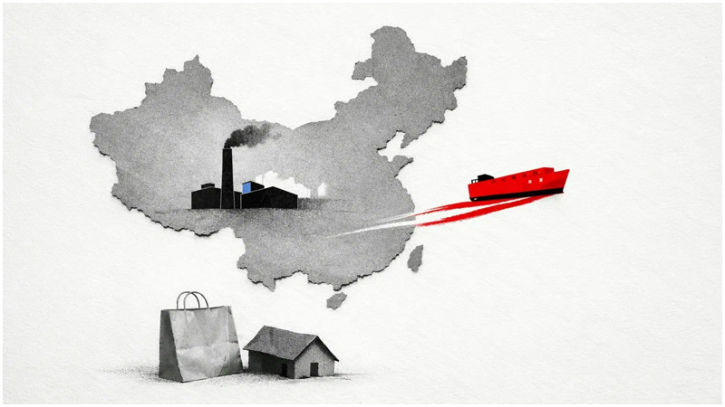
China says its economy grew 5% in 2025, matching Beijing’s annual goal thanks to surging exports and a record trade surplus, even as signs of weakness emerged in the final months of the year.
Government data released Monday showed growth slowed to 4.5% in the fourth quarter, reflecting sluggish consumer spending, a deep property downturn and pressure from US tariff threats.
Economists say the numbers signal a “two-speed economy,” with manufacturing and exports supporting activity while domestic demand remains weak. Some analysts believe official figures overstate performance, citing soft investment and falling property prices.
China also posted its lowest number of births since records began in 1949 — 7.9 million — as the population shrank for a fourth straight year. Economists warn the demographic slide could further weaken demand for housing and consumer goods.
Exports remained the key growth driver, with China reporting a record $1.19 trillion trade surplus, helped by sales to markets outside the United States. But analysts caution the strategy is not sustainable if firms are slashing prices to maintain market share.
The economic outlook remains uncertain as Beijing confronts a severe housing slump. Real estate investment fell 17.2% last year, while home prices dropped 2.7% in December — the steepest fall in five months. Millions of households are stuck with unfinished or devalued homes, undermining confidence and local government finances.
Retail sales grew just 0.9% in December, the weakest in three years, highlighting subdued spending. Policymakers appear to have slowed stimulus late in the year after securing the growth target, saving resources for 2026.
Officials acknowledged “strong supply and weak demand” but insist China can maintain steady growth. Economists warn, however, that China is increasingly exposed to global trade tensions as the US considers extending tariffs and threatens new levies linked to geopolitical disputes.
Beijing has promised “proactive” measures to support confidence, but faces a balancing act — boosting growth without deepening debt and reducing dependence on exports in an unpredictable global economy.
.png)