ECB to hold rates steady amid Iran crisis uncertainty

The European Central Bank is widely expected to keep interest rates unchanged this week as policymakers assess whether inflation pressures caused by the Middle East conflict will be temporary or begin to slow economic growth across the eurozone.
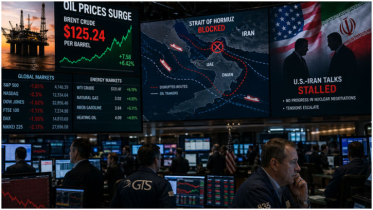
Markets have increased expectations of future rate hikes after the US-Israeli war involving Iran triggered a global energy shock that has already lifted consumer prices in Europe.
Inflation across the 21-country eurozone rose to 2.6 percent in March, above the ECB’s two percent target, and officials have warned that prices could climb further under a worst-case scenario.
Despite those concerns, economists expect the ECB to leave its benchmark deposit rate at two percent during Thursday’s meeting, where it has remained since June last year.
Analysts say the central bank is likely to wait for clearer evidence on how the conflict develops before making any policy changes.
US President Donald Trump has extended a ceasefire with Iran to allow more time for diplomacy, while military strikes in the region have largely paused. However, the Strait of Hormuz remains mostly closed to tanker traffic, continuing to threaten global energy supplies.
Economists note that while energy prices have risen, the shock has not yet matched the scale of disruption seen after Russia’s full invasion of Ukraine in 2022.
ECB policymakers have also signaled patience. Bank of Latvia governor Martins Kazaks said recently that officials were not in a rush and still had time to collect data before deciding on their next move.
Higher interest rates could place additional pressure on the already weak eurozone economy, especially manufacturers that are vulnerable to rising energy costs.
Recent business surveys showed eurozone economic activity contracted in April for the first time in 16 months, reflecting the impact of the conflict.
Attention will now focus on ECB President Christine Lagarde’s post-meeting comments for signals about future policy.
Lagarde recently said the ECB faces “double uncertainty” because it is unclear both how long the geopolitical shock will last and how deeply it will affect the wider economy.
Most economists believe the bank will stay on hold for now, arguing that current conditions are very different from 2022, when inflation spread rapidly beyond energy into wages and broader consumer prices.
.png)