Oil surges above $110 as strait deadlock weighs on global stocks

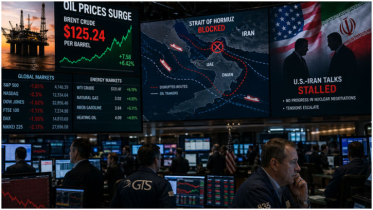
Oil prices climbed sharply on Tuesday, reaching their highest levels since the US-Iran ceasefire, as stalled negotiations over reopening the Strait of Hormuz renewed concerns about inflation and economic uncertainty.
Brent crude rose 2.8 percent to $111.26 a barrel, while West Texas Intermediate gained 3.7 percent to $99.93 per barrel. The gains came as investors grew pessimistic about the chances of a quick agreement between Washington and Tehran.
Efforts to end the Middle East conflict appeared stuck, with the United States reviewing Iran’s latest proposal to reopen the strait, while Iranian officials said Washington could no longer dictate the terms of any deal.
Iran has restricted traffic through the Strait of Hormuz since the beginning of the US-Israeli offensive two months ago. The waterway is one of the world’s most important routes for oil and gas shipments, and the disruption has unsettled global markets.
Reports indicated that US President Donald Trump was unlikely to accept Tehran’s latest offer. Qatar also warned that the region could face a prolonged “frozen conflict” if no lasting settlement is reached.
Market analysts said investors had hoped for progress last weekend, but optimism faded after Trump cancelled a planned trip by envoys Steve Witkoff and Jared Kushner to Islamabad for talks.
Kathleen Brooks, research director at trading platform XTB, said markets were not optimistic because Iran wants to delay discussions over nuclear disarmament.
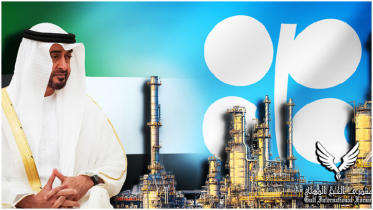
In another major development, the United Arab Emirates announced it would leave the OPEC and OPEC+ alliances on May 1, calling the move strategic.
Rystad Energy analyst Jorge Leon said the UAE’s departure was significant because, alongside Saudi Arabia, it is one of the few producers with substantial spare capacity. He warned the move could weaken OPEC’s long-term influence and increase market volatility.
Higher oil prices also pressured stock markets, particularly technology shares.
The Nasdaq Composite fell nearly one percent, with companies tied to OpenAI declining after a Wall Street Journal report said the ChatGPT maker missed user growth and revenue targets.
Oracle, which is building major data center capacity for OpenAI, dropped more than four percent, while CoreWeave lost 5.8 percent.
Thomas Martin of Globalt Investments said investors were taking profits and expecting uncertainty to continue for some time.
The upcoming earnings reports from major tech firms including Amazon, Google, Meta, and Microsoft are now expected to face closer scrutiny, especially regarding artificial intelligence spending.
European markets mostly closed lower, while Asian markets also declined.
Japan’s stock market came under pressure after the Bank of Japan sharply raised inflation forecasts and cut growth projections because of rising oil prices, while leaving interest rates unchanged.
Meanwhile, the US Federal Reserve began a two-day policy meeting, with investors expecting rates to remain steady despite mounting inflation concerns linked to higher energy costs.
Key market closes:
New York
Dow Jones: up 0.1 percent at 49,141.93
S&P 500: down 0.5 percent at 7,138.80
Nasdaq Composite: down 0.9 percent at 24,663.80
London
FTSE 100: up 0.1 percent at 10,332.79
Paris
CAC 40: down 0.5 percent at 8,104.09
Frankfurt
DAX: down 0.3 percent at 24,293.56
Tokyo
Nikkei 225: down 1.0 percent at 59,917.46
Hong Kong
Hang Seng: down 1.0 percent at 25,679.78
Shanghai
Composite: down 0.2 percent at 4,078.64
.png)