UAE quits OPEC amid Gulf tensions and energy crisis

The United Arab Emirates announced on Tuesday that it is leaving OPEC, delivering a major setback to the global oil producers’ group as the ongoing Iran war deepens divisions among Gulf nations.
The departure of the UAE, one of OPEC’s largest producers, is expected to weaken the group’s influence over global oil supplies and widen tensions with Saudi Arabia, which is widely seen as OPEC’s leading power.
The move could also allow the UAE to increase oil production once exports through the Gulf return to normal, as it would no longer be bound by OPEC production quotas.
UAE Energy Minister Suhail Mohamed al-Mazrouei said the decision followed a review of the country’s current and future energy strategies.
He told Reuters that the matter had not been discussed with any other country and described it as a carefully considered policy decision based on production goals.
Mazrouei added that global energy demand is expected to grow, suggesting the UAE wants to position itself to meet future market needs.
The UAE is set to formally leave OPEC and OPEC+ on May 1. OPEC+ includes OPEC members and allied producers.
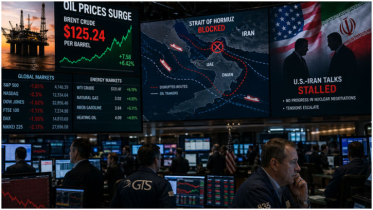
Oil prices reduced some earlier gains after the announcement, though Mazrouei said he did not expect major short-term market disruption because of continued shipping constraints in the Strait of Hormuz.
The waterway, located between Iran and Oman, normally handles about one-fifth of the world’s crude oil and liquefied natural gas shipments. However, threats and attacks linked to the conflict have disrupted traffic.
According to the International Energy Agency, OPEC+ accounted for 44 percent of global oil output in March, down from around 48 percent in February. That share is expected to decline further as production outages continue and the UAE exits the alliance.
Analysts said the UAE’s withdrawal may benefit consumers and economies by increasing future oil supply.
Monica Malik, chief economist at ADCB, said the move opens the door for the UAE to gain global market share once geopolitical tensions ease.
Rystad analyst Jorge Leon noted that the UAE is one of the few OPEC members, along with Saudi Arabia, with significant spare production capacity.
He said the UAE would have both the incentive and ability to raise production outside the group, creating broader questions about Saudi Arabia’s long-term role as the main stabiliser of oil markets.
The decision also highlights a growing rivalry between Abu Dhabi and Riyadh.
Once close allies, the two Gulf powers have increasingly competed over oil policy, regional influence, and attracting international investment and talent.
The UAE has also strengthened ties with the United States and Israel in recent years, especially after coming under attack during the Iran conflict.
Meanwhile, Gulf leaders met in Saudi Arabia on Tuesday to discuss a coordinated response to thousands of Iranian missile and drone strikes launched since the US-Israeli war against Iran began in late February.
.png)