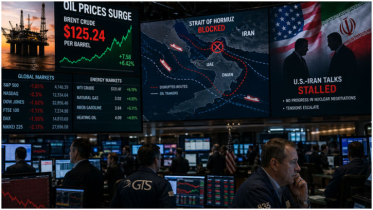
Oil tops $116 as Iran warns of possible US invasion

Oil prices climbed to their highest level in nearly two weeks as tensions escalated in the ongoing US-Israel war with Iran. Brent crude rose more than 3 percent on Monday morning, surpassing $116 a barrel and approaching levels last seen in mid-March.
The surge followed warnings from Tehran that it is prepared for a potential US ground invasion. Iran’s parliamentary leadership signaled a strong response, saying any incoming US forces would face severe retaliation. The conflict intensified over the weekend, with Iran-backed Houthi forces launching missiles at Israel and Israeli operations expanding in southern Lebanon.
Asian stock markets reacted sharply, with major indexes in Japan and South Korea dropping more than 4 percent in early trading. The broader economic impact is being driven by Iran’s effective closure of the Strait of Hormuz, a critical route that handles about one-fifth of global oil and liquefied natural gas supplies.
Oil prices have jumped nearly 60 percent since the war began, increasing fuel costs worldwide and forcing countries to adopt emergency energy-saving measures. Analysts warn that prices could continue rising unless shipping activity in the strait returns to normal.
US President Donald Trump has threatened further action against Iran’s energy infrastructure if it does not reopen the waterway, while also the possibility of a diplomatic breakthrough. However, Tehran has rejected US proposals and put forward its own conditions, including reparations and recognition of its authority over the strait.
Despite limited movement resuming, maritime traffic remains far below pre-war levels. Some countries, including Pakistan and Malaysia, have secured partial transit agreements with Iran, but overall disruption continues to strain global energy markets.
.png)