Middle East war: global economic fallout
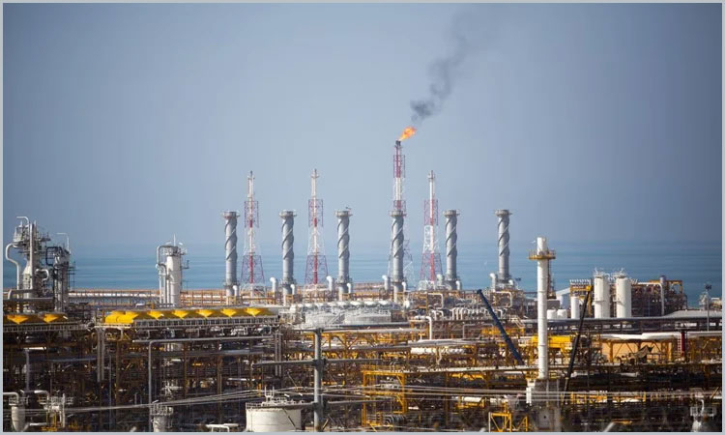
Here are the latest economic events in the Middle East war:
Ukraine eyeing diesel supply
Ukrainian President Volodymyr Zelensky on Monday ordered the government to ensure stable diesel supplies, as the war in the Middle East sends oil prices spiralling.
Russia has battered Ukraine's refining capacity since invading in 2022, making Kyiv heavily dependent on fuel imports.
Diesel prices in Ukraine have surged almost 25 percent since the outbreak of the US-Israeli war against Iran, with analysts warning that supply prospects for April remained unclear.
US stocks rally
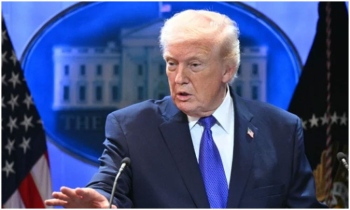
Wall Street stocks closed higher Monday after US President Donald Trump hailed "very good" talks with an unidentified Iranian official while shelving plans for new attacks.
Even though Tehran denied that negotiations took place, both the Dow and Nasdaq Composite index jumped by 1.4 percent.
Oil tumbles on peace prospects
Oil prices, in turn, eased as Trump said he would postpone threatened strikes on Iranian energy infrastructure as a result of the talks.
Brent crude, the international benchmark, closed 10.9 percent lower at $99.94 a barrel, while the main US oil contract West Texas Intermediate dropped 10.3 percent to $88.13 a barrel.
Energy prices have surged since the United States and Israel's war against Iran triggered Tehran's retaliation that disrupted oil deliveries through the Strait of Hormuz.
Oil disruption 'temporary'
US Energy Secretary Chris Wright said oil market disruptions were "temporary," speaking at a conference in Houston.
But Mike Wirth, chief executive of the US energy giant Chevron, warned that oil prices had yet to fully factor in fallout from the blockade.
"In particular, Asia is facing some real concerns about supply," Wirth said, citing government measures to conserve stocks.
TotalEnergies chief Patrick Pouyanne meanwhile said he expected "very high" liquefied natural gas prices by the summer if the Strait of Hormuz is not reopened.
IEA chief issues warnings
International Energy Agency chief Fatih Birol warned that the global economy was under "major threat" from the energy crisis caused by the Middle East war, adding that "no country will be immune".
At least 40 energy assets across nine Middle East countries were "severely" damaged due to the war, Birol added.
China limits fuel prices
China has limited the amount by which the country's retail fuel costs can rise, the government announced.
China's state planner, the National Development and Reform Commission, said it increased the maximum retail prices for gasoline and diesel by 1,160 yuan ($168) and 1,115 yuan per metric ton respectively, starting from midnight.
Sweden weighs lower fuel taxes
Sweden's government said it was proposing to temporarily lower taxes on petrol and diesel to soften the blow of surging energy prices.
If passed by parliament, the tax cut would go into force on May 1 and last until the end of September, and as a first step be lowered to the EU's minimum level.
"All parties need to recognise that what is happening in the Middle East and the rest of the world is putting Sweden's economy to the test," Prime Minister Ulf Kristersson told a news conference.
Relief measures in Greece
Greek Prime Minister Kyriakos Mitsotakis said that the government had earmarked 300 million euros ($347 million) in relief for households and farmers in April and May to help them cope with rising fuel prices.
The subsidies are targeted at reducing the cost of diesel fuel, petrol and fertiliser. Part of the initiative is aimed at holding back price hikes in ferry fares to the country's many islands, Mitsotakis said.
Croatia extends fuel price caps
Croatia renewed fuel price caps in place since March 9 to curb rises at the pump, Prime Minister Andrej Plenkovic said.
Diesel will be capped at 1.73 euros ($2.01) per litre, instead of a projected 1.86 euros ($2.16), while petrol will be 1.62 euros ($1.88) per litre rather than rising to 1.71 euros ($1.98).
.png)