US oil companies poised for $63bn windfall amid Iran war

Major American energy companies could receive an estimated $63 billion boost in revenues as rising tensions and disruptions linked to conflict in the Gulf region push global oil prices higher, analysts say.
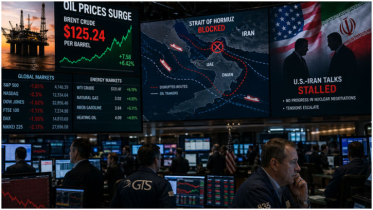
The surge in crude prices follows shipping disruptions and security concerns affecting tanker routes in the Middle East, particularly around the Strait of Hormuz. The narrow waterway handles nearly a fifth of the world’s daily oil supply, making instability there a major driver of global energy markets.
As tensions increased in the region, traders reacted by pushing benchmark prices upward. Both Brent crude and West Texas Intermediate futures rose sharply amid fears that supply disruptions could worsen if the conflict spreads further.
For US oil producers, especially companies operating shale fields in states such as Texas and North Dakota, the price surge presents a significant financial opportunity. Shale production allows companies to increase output relatively quickly compared with traditional oil projects, enabling them to take advantage of market price spikes.
Industry giants including ExxonMobil, Chevron and ConocoPhillips are among those expected to benefit most, as higher global prices translate directly into stronger revenues while production costs remain relatively stable. Analysts estimate that if elevated prices continue through the coming year, American producers could collectively earn more than $63 billion in additional revenue compared with earlier forecasts.
The situation also reflects the growing role of the United States in global energy markets. Advances in hydraulic fracturing and horizontal drilling have transformed the country into one of the world’s leading oil producers, reshaping global supply dynamics and reducing reliance on Middle Eastern oil.
However, higher oil prices are likely to increase fuel costs for consumers and businesses. Rising energy prices can push up transportation and manufacturing expenses, potentially contributing to broader inflationary pressures.
Environmental groups have criticized the large profits expected for oil companies during geopolitical crises, arguing that such windfalls highlight the need for greater investment in renewable energy and reduced reliance on fossil fuels.
Despite these concerns, energy industry leaders maintain that oil remains critical to global transportation and industrial systems. Meanwhile, governments and international organizations are monitoring developments in the Gulf closely, with the possibility of using strategic oil reserves if supply disruptions intensify.
As the crisis continues, energy markets remain highly sensitive to events in the region, with even small incidents capable of causing sharp swings in global oil prices.
.png)